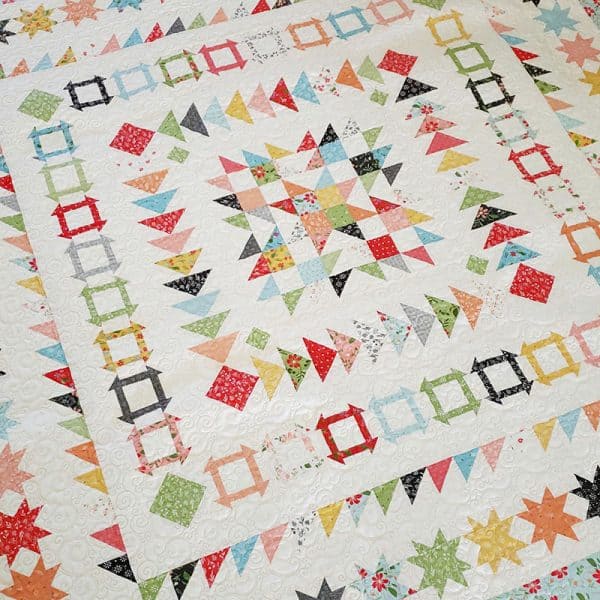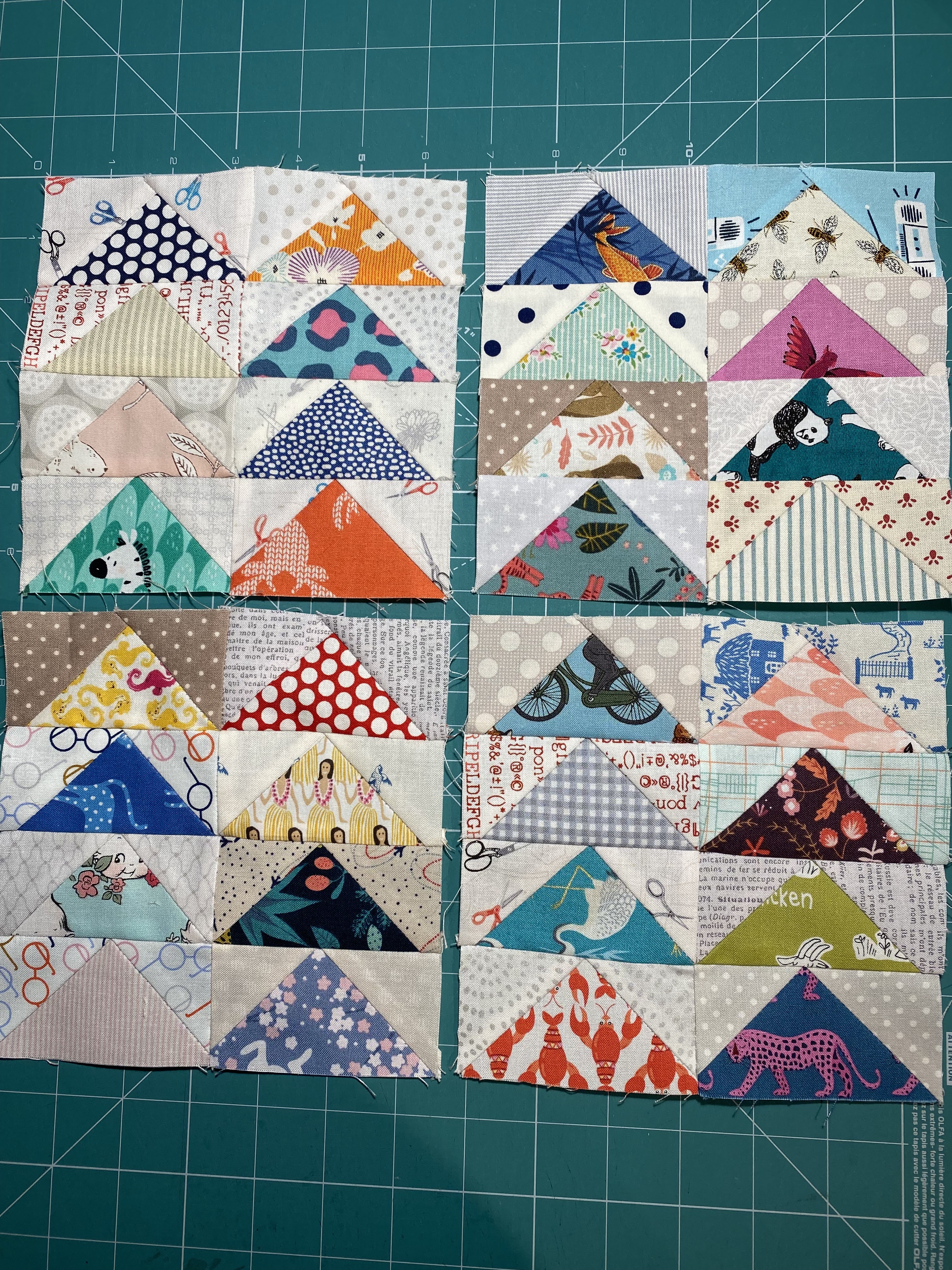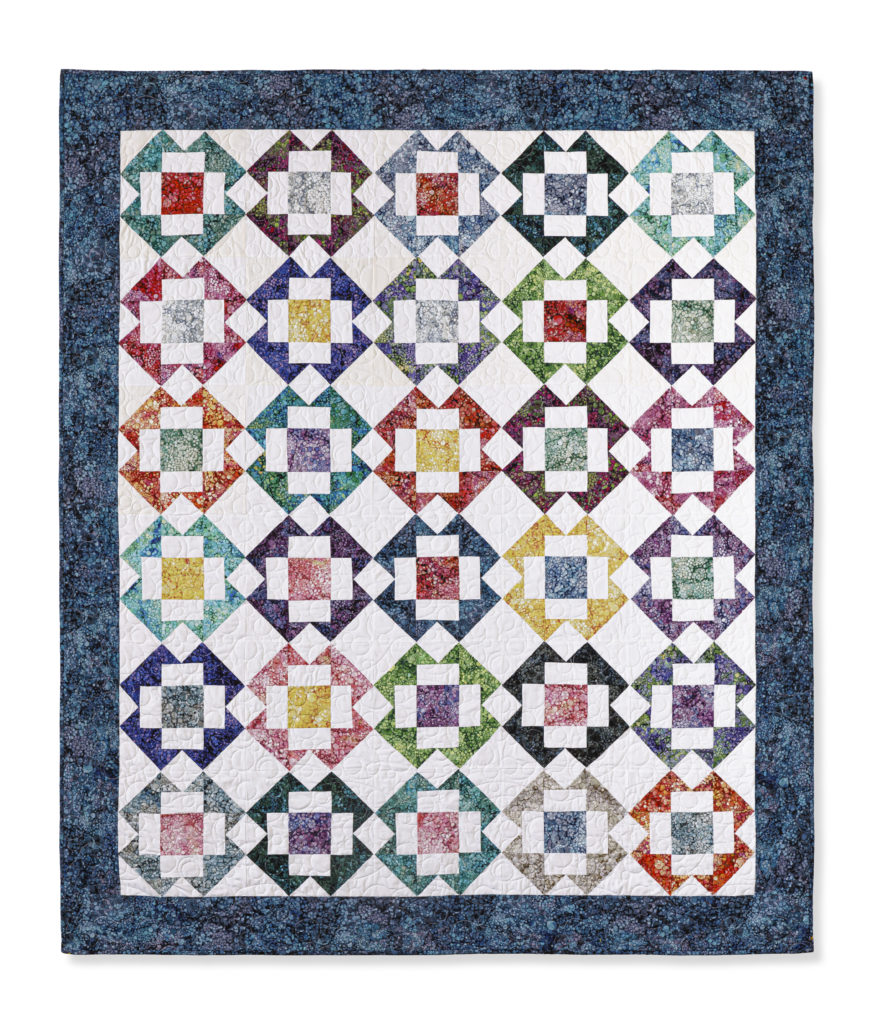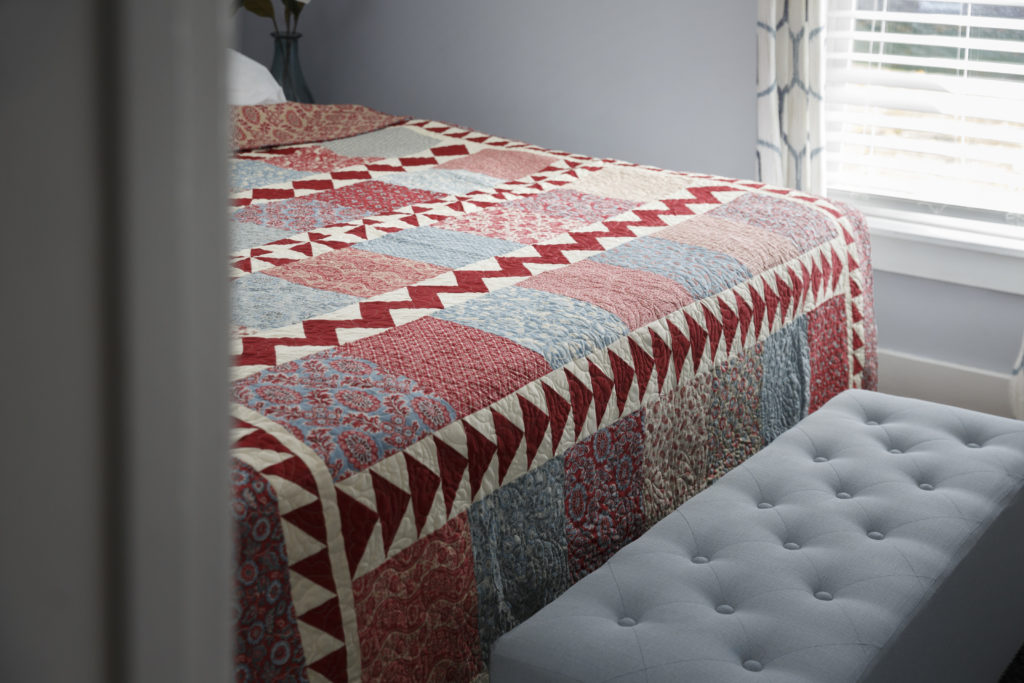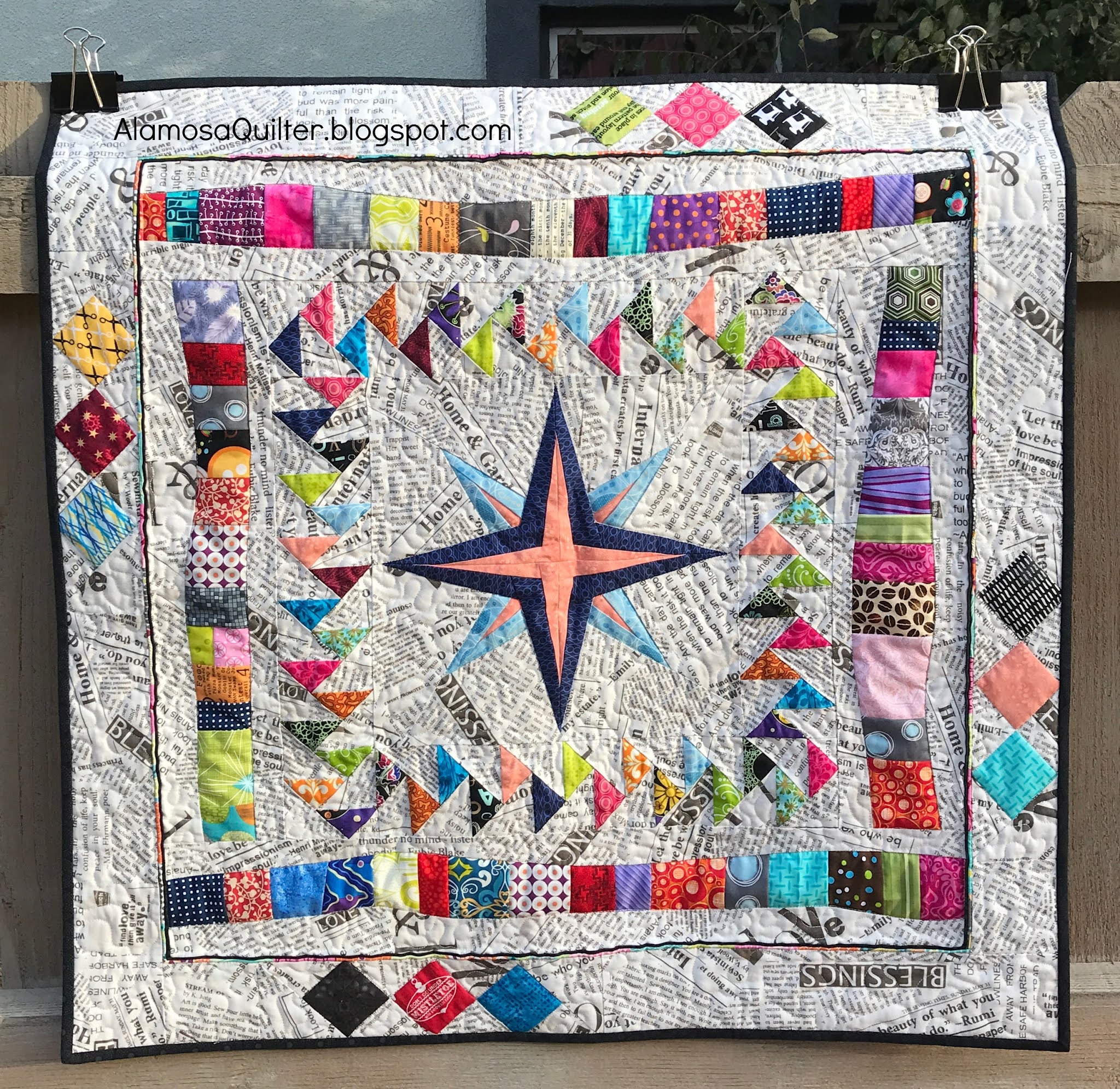
I’m back with Week 4 of the Arrow Stone QAL, and we’re changing up the schedule a bit. Originally I had quarter-square triangles in the lesson plan, but we’re going to make flying geese this week! Since that’s the next step in the pattern, logically that’s what I’ve been working on (because I don’t even look at my own schedule)! I’ve heard from a few of you that flying geese have been your “mountain to climb”. We’re going to take it one step at a time and you’ll be conquering ...
read more
So this is the last Project Quilting challenge (season 13)for 2022. As you know the challenge quilted project can be anything (from a quilted coaster to a full sized quilt) but has to be done (start to finish) during the challenge week. It’s amazing what quilters can accomplish.

I don’t have a lot of time this week, but I really wanted to make something simple so I don’t miss out on participating this week.

I used my Electric Quilt 8 (EQ8) computer program to quickly design a doll quilt/table topper with a strip of flying ...
read morePart 4: Quilting
It has been ages since I finished my version of Bonnie Hunter's mystery quilt Frolic. This was the Quiltville Winter Mystery for the 2019/2020 season. I played with colors so I could use some fabrics I had on hand. I went with constant fabrics throughout and most of them read as solids. There are solids, but not as many as it seems upon first glance. I added my embroidered label directly onto the backing fabric prior to quilting. I really like this as it makes sure that label stays with the quilt. read moreHere’s an easy flying geese quilt block tutorial that will save you time and fabric! Learn when to choose this one over the traditional method.
Last night I was testing this block for a quilt pattern I needed to write. It finishes at 12″ but the main reason to test it was because the size of the flying-geese units was not conventional, i.e., 2″ x 4″, 3″ x 6″, etc. Thus, I could not use the traditional method to construct them, as they measured 2-1/4″ x 4-1/4″ finished.
I do use EQ8, the software by the ...
read moreThe smallest origami crane ever made was just .1 mm square (that’s 1/25 of an inch!) The all-time largest measured a whopping 256 feet. And this week we’re working on the world’s coziest origami!
The Big T Origami quilt is based on an antique favorite. It’s sometimes called Folded Corners, and it comes together quickly with flying geese and half square triangles.

In this tutorial, Jenny shares the secret to perfectly sharp flying geese points, and she uses her trusty squaring tool and bias seam tape to keep everything as neat and tidy as true ...
read moreOver the years, I’ve been fortunate enough to experience how fabrics, colors, and designs positively affected me. I always thought that my style will never change as I always gravitated towards earthy and neutral colors, but there is something about color that always caught my eye. Although neutral colors will always be nurturing, I later discovered that it’s the bright and cheerful colors that complete the mix between cozy and happiness. Sometimes we just need a boost of joy, and today is the day you can experience that with Jessica Swift’s latest collection, Flight Path!
Checking all ...
Every year, I look forward to Bonnie Hunter's Mystery quilt which begins the day after Thanksgiving here in the US. It is fun to quilt along with so many others from around the world.
I've completed Clues 1 and 2 of this year's mystery--Rhododendron Trail.
| Rhododendron Trail (Clues 1 and 2) |
I'm looking forward to seeing how this mystery comes together.
If you would like to participate, it is easy! Simply visit Bonnie's blog and click on the Rhododendron Trail tab at the top. All the instructions will be posted there each Friday. There is ...
read moreIt started like any other Triple Play tutorial.
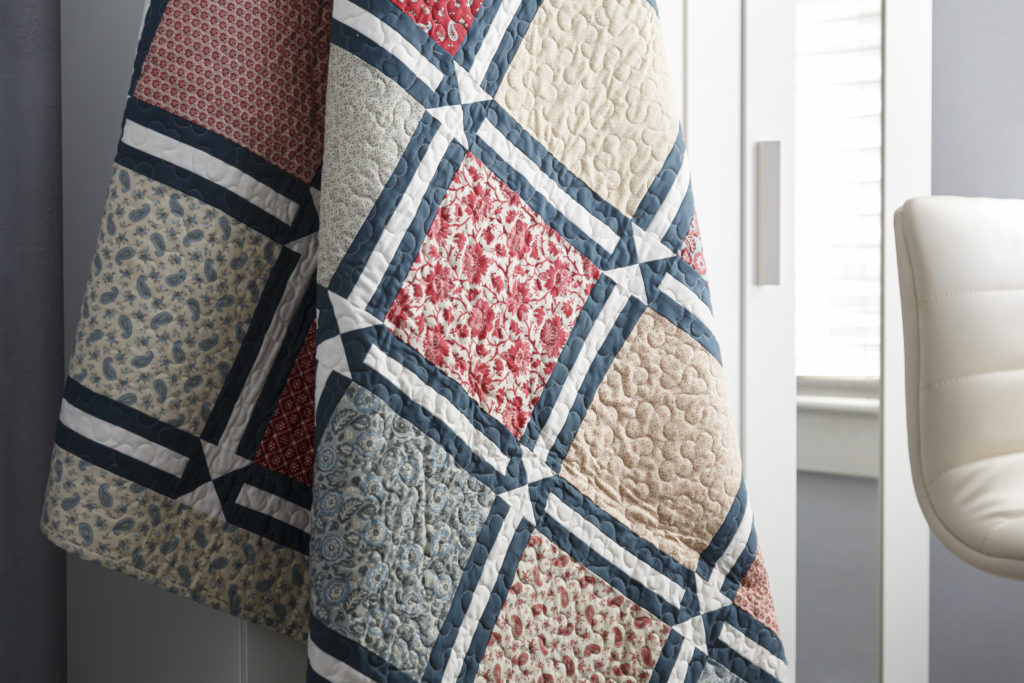
Jenny, Misty, and Natalie were each asked to design a quilt with pieced sashing. Simple, right?

Natalie created a cute arrow sashing with strip sets and hourglass blocks.

Misty used a traditional Seminole technique to sash her quilt with diamonds. And then, there was Jenny. (Oh, Jenny!)

First, Jenny stitched stacks and stacks (and STACKS!) of half-square triangles. Then the sashing began.
She made pinwheel, chevron, and herringbone sashing. She made flying geese, square-in-a-square, and sawtooth. And then…she kept ...
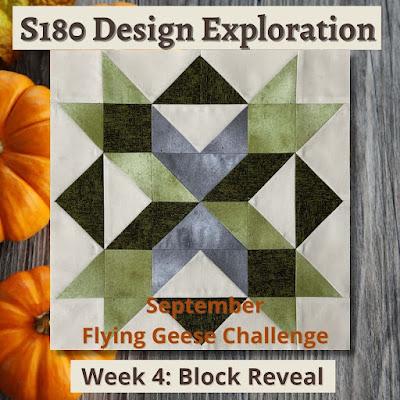
read moreThis month the talented Studio 180 Design Certified Instructors Block Exploration Challenge focused on different Flying Geese. It was fun to design blocks that just use those units.
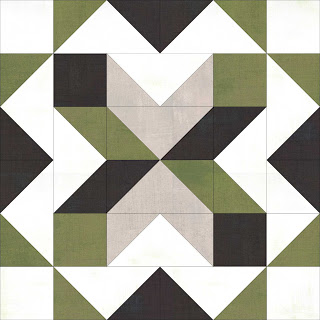
I usually use either EQ8 (Electric Quilt 8) or Adobe Illustrator when I design my patterns. For most of my blocks, I love to use EQ8. You will see my mockup for this block that I develop in EQ8. This block was so much fun; due to how coloring was done, you get a 3D look in the block center.
Well, I just did a search to figure out how long ago I finished the top of this project.
Answer: Dec 7, 2016!
It has been basted and ready for quilting since March of 2017.
I needed something to quilt recently to get someone's mid-arm machine working. This is all that I had that was already basted and ready to go. Sadly that is the only reason this one got finished, but I'm glad it is finally done!
You can read previous posts about this project by clicking the following link: Art Group Project That post says that ...
read moreLast week, I showed you how to make the Quickets in my Block Party Block #18, "Pointed Square." This week, I want to continue with the Wing Clipper tool showing you how to make Flying Geese.
The Wing Clipper tool is one of the Studio 180 Design fundamental tools that I talked about in my blog post, "What Studio 180 Design Tools Should I start with?." This tool was created to make traditional Flying Geese units.
The construction method of these units uses the Non-Waste Method, which uses one large and four small squares to make four flying geese at ...
read moreThe Quilt Police are going to have a problem with this video … I show you how I stitch-in-the-ditch with my seams pressed open. GASP!
I think once upon a time when quilting fabric, thread, sewing machines and batting weren’t as good as they were today, this may have cause some issues. So we had this piece of knowledge passed down that you can’t press your seams open and if you do, sitching-in-the-ditch is out for quilting options.
But as long as you are using quilt shop quality cotton, high quality thread, batting, and a modern sewing machine, not ...
read moreThe Quilt Police are going to have a problem with this video … I show you how I stitch-in-the-ditch with my seams pressed open. GASP!
I think once upon a time when quilting fabric, thread, sewing machines and batting weren’t as good as they were today, this may have cause some issues. So we had this piece of knowledge passed down that you can’t press your seams open and if you do, sitching-in-the-ditch is out for quilting options.
But as long as you are using quilt shop quality cotton, high quality thread, batting, and a modern sewing machine, not ...
read moreTriangles quilts are absolutely beautiful, but they can also be intimidating. Getting your blocks to turn out the right size with all of your points in the right place can be a bit of a challenge.
That’s why we created the Triangle Masterclass, a collection of eight videos focusing on different types of triangle units that are commonly used in quilts.
In today’s video I show you how to sew a mitered border. This is a technique a reserve only for when the quilt or the fabric calls for it. What I mean by that is when there ...
read moreTriangles quilts are absolutely beautiful, but they can also be intimidating. Getting your blocks to turn out the right size with all of your points in the right place can be a bit of a challenge.
That’s why we created the Triangle Masterclass, a collection of eight videos focusing on different types of triangle units that are commonly used in quilts.
In today’s video I’m sharing how I always use two pins when I am joining triangle points to make sure they all come together correctly. I use one to align the points right on top of ...
read moreWelcome, Welcome, Welcome to Stitchin Heaven’s Journey’s BOM – Month 12! This has been a spectacular year. You all have worked so hard. Thank you to Deb Luttrell, Founder of Stitchin Heaven, Deb Tucker, Creative Kingpin of Studio 180 Design, Marie Bostwick New York Times best selling author and Jason Yenter Fabric Designer & President of In the Beginning Fabrics for making this all possible. Now to assemble your quilts!
Note: WOF stands for width of fabric. This month you will assemble your quilt top and add the borders.
Gather the following ...
read moreTriangles quilts are absolutely beautiful, but they can also be intimidating. Getting your blocks to turn out the right size with all of your points in the right place can be a bit of a challenge.
That’s why we created the Triangle Masterclass, a collection of eight videos focusing on different types of triangle units that are commonly used in quilts.
In today’s video we’re starting to sew our triangle units together into a block. This can be one of the most challenging parts because it is really easy for your points to get out of alignment ...
read moreTriangles quilts are absolutely beautiful, but they can also be intimidating. Getting your blocks to turn out the right size with all of your points in the right place can be a bit of a challenge.
That’s why we created the Triangle Masterclass, a collection of eight videos focusing on different types of triangle units that are commonly used in quilts.
In today’s video we’re making 4-at-a-time Flying Geese. They’re also called no-waste flying geese. We’re starting out with one square that is 1.25 inches larger than your finished block width for the large ...
read moreTriangles quilts are absolutely beautiful, but they can also be intimidating. Getting your blocks to turn out the right size with all of your points in the right place can be a bit of a challenge.
That’s why we created the Triangle Masterclass, a collection of eight videos focusing on different types of triangle units that are commonly used in quilts.
In today’s video we’re making double pinwheels. We’re starting out with two squares that are 1.25 inches larger than your finished block for the quarter square triangles and two squares that are 1 inch ...
read moreTriangles quilts are absolutely beautiful, but they can also be intimidating. Getting your blocks to turn out the right size with all of your points in the right place can be a bit of a challenge.
That’s why we created the Triangle Masterclass, a collection of eight videos focusing on different types of triangle units that are commonly used in quilts.
In today’s video we’re making hourglass triangles, which are also called quarter square triangles. We’re starting out with four squares that are 1.25 inches larger than your finished hourglass.
We cover the process in ...
read more